Welcome to my website, I'm glad to see you here.
I'm a counsellor who works in a relational, integrative way which means that I see the professional therapeutic relationship between us as a transformational thing in itself & I blend different theoretical ideas as I work to tailor the process for each individual.
My aim is to provide a compassionate, accepting space for you to explore, understand yourself and your relationships more deeply. I don't just work with words and thoughts but also with how you experience emotions in your body.
I'm not a sit silently nodding therapist. We will work collaboratively and supportively. I will also offer gentle challenge when required, offer insights and give you space to notice what is going on for you.
We will keep our sights on the future and what you are aiming to change whilst we look at past experiences and how they are affecting you in the present.
I'm informed by a range of theories including EMDR (Eye Movement Desensitisation and Reprocessing), Person-Centred, Attachment Based Psychodynamic Theory and Cognitive Behavioural Therapy (CBT) in my work.
This is a really useful article if you are considering EMDR to help understand how it works in the context of a therapeutic relationship.
I offer confidential counselling and EMDR therapy for individual adults (18 plus) in Muswell Hill N10, North London face to face and online UK wide.
I am LGBTQIA+ and neurodivergence affirming
How do we start?
The starting place is us finding out if we are a good fit to work together. I offer a brief free phone call and or we can have an email conversation then you can book an initial session with me if we decide to proceed.
Though the majority of initial enquirers end up staying for ongoing sessions, I won't necessarily work with everyone who contacts me. If it seems I don't have the right experience to fit their needs or if it seems I might work in a way that's different to what is wanted then I may suggest or help find an alternative therapist.
Fees
£70 for 60 minute daytime session between 9am and 5pm
£80 for 60 minute early evening sessions (limited availability)
*Please do get in contact if you are on a low income as I have some reduced fee slots during the day. I also offer charities a reduced fee for clients they are sponsoring to have therapy.
Appointments take place Mondays, Tuesdays, Wednesdays & Thursdays subject to availability
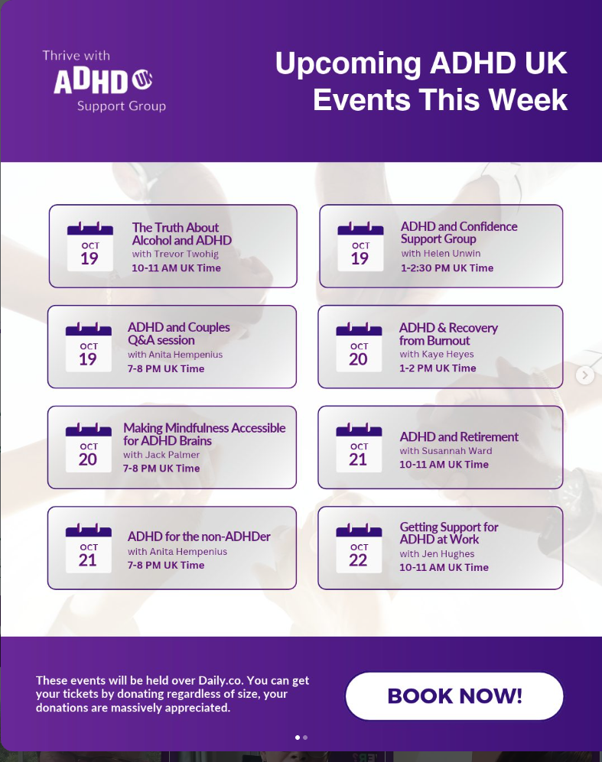
October is ADHD awareness month
ADHD Awareness Month takes place annually throughout October to increase
understanding of Attention Deficit Hyperactivity Disorder (ADHD), reduce stigma, and share resources.
There’s been a lot of negativity in the press recently about the supposed overdiagnosis of ADHD, which can feel depressing especially to those who may be diagnosed in later life and who have found it helpful to finally understand themselves and why certain things may have been very difficult for them.
ADHD UK has a myth busters page https://adhduk.co.uk/page-for-adhd-deniers/
And lots of useful resources https://adhduk.co.uk/adhd-useful-resources/
and events https://events.adhduk.co.uk/
Whilst I'm not an expert on ADHD I have lived experience of being late diagnosed and supporting neurodivergent family members and navigating the school SEND system.
Get in Touch
Do use this form to contact me and I can answer via email or phone as you prefer.
Please let me know briefly what brings you to seek counselling and a preferred time and day for sessions.
My Location
My practice is located in Muswell Hill N10, near south Friern Barnet within easy reach of East Finchley, North Finchley, Bounds Green, Wood Green, Crouch End, Highgate and most of North London. Some of my clients have travelled from further afield including Enfield, Stanmore, Northwood and Cricklewood.
My practice has excellent public transport links but you can park on the drive outside my practice if coming by car.
I also offer online therapy across the whole of the UK
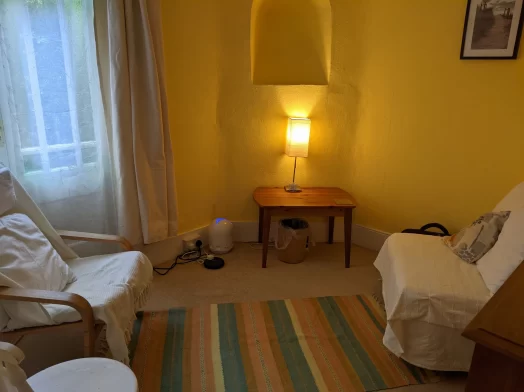
Appointments take place in a dedicated room within a private home rather than in an office or clinic setting.
Free parking on drive or on street.
Excellent public transport from North London including Camden, Cockfosters, Crouch End, East Finchley, High Barnet, Hornsey, Wood Green, Islington and Southgate.

I am a Registered British Association for Counselling and Psychotherapy (BACP) Accredited Counsellor and a member of the EMDR Association UK & Ireland.
I have worked as a Counsellor since 1995. My experience covers working in the NHS in West Essex IAPT and Mount Vernon Hospital, charitable sector and in private practice. You can learn more about me by clicking here.
I previously worked with The Lullaby Trust for 8 years and 10 months supporting bereaved families whose baby or young child had died suddenly and unexpectedly, in addition to my Muswell Hill private practice.
I have full Professional Indemnity Insurance
Issues I can help with:
People come to see me for many reasons including but not limited to:
- Cancer
- Living with chronic illness
- Grief, loss and bereavement
- Baby loss; miscarriage, TFMR, stillbirth, neonatal death and SIDS/SUDI
- Birth trauma
- Coping with pregnancy after a loss
- Trauma
- Feelings of depression & anxiety
- Exploring neurodivergence
- I am affirming of LGBTQIA people
- Relationship difficulties (please note that I see individuals rather than couples)
- Feeling anxious; finding ways to cope
- Low self esteem
- Stress and learning how to relax
- Coming to terms with change in your life, for example, going through menopause



GDPR & Cookie Policies | AI Policy | Safeguarding Policy | Client Summary Safeguarding Policy | Certificate of Clinical Will
© Jenny Poirier is powered by WebHealer